Sameday, FAN Courier or Cargus: choosing couriers and lockers for your store
Updated on November 7, 2026 · The Shopmonsite team
Your customer never sees your hosting, your code or your product photos studio. What they see is a parcel, a text message and a courier at the door. Or a locker that opens in three seconds on the way home. In Romania, that last mile decides whether a first order becomes a second one. And the choice usually comes down to three names: Sameday, FAN Courier and Cargus.
The short version
- All three are national couriers that serve online stores across Romania, with door delivery, cash on delivery and business accounts.
- Each has its own locker network: Sameday easybox, FAN Courier FANbox and Cargus Ship & Go. Lockers are now a delivery option many shoppers look for at checkout.
- There is no universal winner. The right courier depends on your parcel size, your regions, your share of cash on delivery and how your store connects to their system.
- Many stores run two couriers: one main partner and one backup or locker option.
This article is part of our guide to selling online in Romania. If you are still planning your shop, start with how to launch an online store in Romania.
Why the courier choice matters more than you think
Most new store owners pick a courier the way they pick a phone plan: a friend recommends one, they sign, they forget. Then the first busy week arrives and they discover what the contract actually says.
The courier affects four things your customer feels directly:
- Delivery time. Next day or two days changes how shoppers compare you with a marketplace.
- Delivery choice. Door, locker or pickup point. Shoppers who work long hours often prefer a locker near home or the office.
- Cash on delivery experience. How fast the courier pays the collected cash back to you changes your cash flow, especially in the first months.
- Returns. A simple return process is a trust signal before the first order, not only after.
Sameday, FAN Courier and Cargus at a glance
We will not publish price lists here: courier rates are negotiated, change often and depend on your volume. What we can compare is the shape of each offer, so you know what to ask.
| What to compare | Sameday | FAN Courier | Cargus |
|---|---|---|---|
| Locker network | easybox | FANbox | Ship & Go |
| Door delivery | Yes | Yes | Yes |
| Cash on delivery | Yes | Yes | Yes |
| Business account and API | Yes | Yes | Yes |
| What to check | Locker coverage in your buyers’ areas | Coverage and delivery times for your regions | Pickup points and locker options for your parcel sizes |
The table looks almost identical on purpose. On paper, the three offers are similar. The differences appear in the details: the rate for your parcel weight, cash on delivery fees, how fast collected cash is paid out, cut-off times for pickup, and how well their system talks to your store.
Lockers: why shoppers ask for them
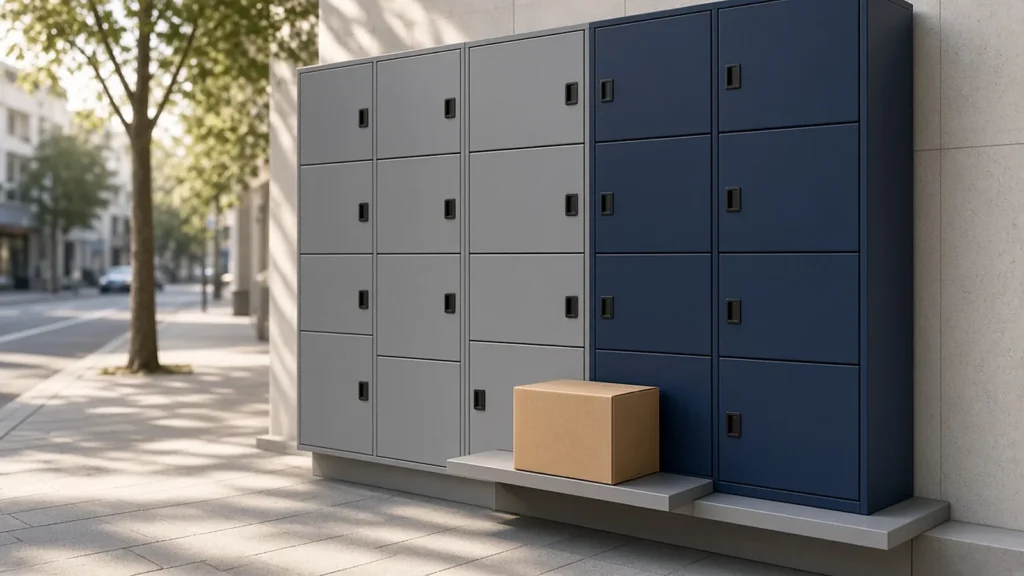
Parcel lockers changed the way many Romanians receive online orders. The shopper picks a locker at checkout, gets a code by text message or in the courier app, and collects the parcel when it suits them. No waiting at home, no missed delivery, no call from a courier who cannot find the building.
For a store, lockers bring three advantages:
- Fewer failed deliveries. The parcel waits in the locker instead of going back and forth.
- A modern image. Offering locker delivery signals that your store is organised.
- Often a lower delivery cost than door delivery, depending on your contract. Check this in your offer.
And three limits you should know before promising lockers to everyone:
- Size and weight. Locker compartments have maximum dimensions. Bulky products need door delivery.
- Coverage. Lockers are dense in large cities and thinner in some rural areas. Check coverage where your buyers actually live.
- Cash on delivery at the locker. Depending on the courier, paying at the locker may be available by card. Check what each network supports for your account.
How to choose: five questions in the right order
1. What do you ship?
Start with your parcels, not with the courier. Weigh and measure your five best selling products as they will leave your warehouse, packaging included. Fragile, heavy, bulky or perishable items narrow the options quickly.
2. Where are your buyers?
If most of your orders go to Bucharest, Cluj-Napoca, Iași, Timișoara or Brașov, locker density and next day delivery matter most. If you sell a lot to smaller towns and villages, door delivery coverage and delivery times outside large cities become the priority.
3. How much cash on delivery will you handle?
Cash on delivery is still a strong habit in Romania. If a large share of your orders will be paid at delivery, compare three things: the fee per cash on delivery parcel, how often the courier pays the collected money to your bank account, and how refused parcels are handled.
4. How will the courier connect to your store?
This is where the difference between a calm business and a stressful one appears. Without integration, someone copies each address into the courier platform, generates labels by hand and pastes tracking numbers into emails. With integration, the order creates the shipment, the label prints, and the customer gets tracking automatically.
5. What happens when something goes wrong?
Ask how damaged parcels, lost parcels and disputes are handled, who your contact person is, and how fast they answer. A courier you can reach on a busy Friday afternoon is worth a lot.
One courier or two?
Many established stores in Romania work with two couriers. Not because they love paperwork, but because it gives options.
Reasons to add a second courier:
- Offer the locker network your customers prefer. Some shoppers have an easybox next door, others a FANbox at their supermarket.
- Keep shipping during peaks. Around Black Friday and the winter holidays, a backup courier reduces risk.
- Compare service quality with real data instead of impressions.
Reasons to stay with one courier at the start:
- Simpler daily routine: one pickup, one platform, one invoice.
- Better negotiating position as your volume grows.
- Less to configure and test in your store.
Our usual advice for a new store: start with one main courier that fits your parcels and buyers, add a locker option early if your products allow it, and add a second courier once you have a few months of real data.
Integration: the part nobody shows in the brochure
Every courier will tell you they have an API, a plugin or a platform. The question is how much of your daily work it actually removes.
A good integration in your store should do the following:
- Show the right delivery options at checkout, with the locker map when relevant.
- Calculate the shipping cost the way you decided: flat rate, free above a threshold, or by weight.
- Create the shipment and the AWB label from the order in one click, or automatically.
- Send the tracking number to the customer by email.
- Update the order status when the parcel is delivered or returned.
Shipping costs at checkout: what Romanian shoppers react to
How you display shipping cost often matters as much as the cost itself.
- Show it early. A shipping fee discovered on the last step is a classic reason for abandoned carts. Mention delivery cost on the product page or in a banner.
- Free shipping thresholds work when they are close to your average order. If your average basket is 150 RON, a free shipping threshold at 200 RON encourages one more item. A threshold at 500 RON just looks like a trick.
- Lockers can be cheaper for the shopper. If your contract allows it, pass part of the saving on. It nudges buyers towards the option with fewer failed deliveries.
- Be honest about delivery times. Promising next day delivery and arriving in three days costs more trust than promising two days and arriving on time.
Returns: plan them on day one
Consumers buying online in the EU generally have a right of withdrawal for most products, so returns are part of the business, not an exception. The rules have details and exceptions, so have your terms and returns page reviewed by a lawyer or consultant.
On the logistics side, decide in advance:
- Who pays the return shipping, and say so clearly on your returns page.
- Whether customers can return through a locker or pickup point, which many find easier.
- How you check returned products and how fast you refund.
- Which person in your team handles return emails.
Mistakes we see often
- Choosing a courier only on the price per parcel. A cheap rate with slow cash on delivery payouts or poor claims handling can cost more in the end.
- No packaging standard. Different box sizes for the same product mean surprise surcharges and broken items.
- Manual label copying at scale. Fine for five orders a week. A mistake factory at fifty.
- Ignoring the tracking email. Shoppers who do not get a tracking link write to you instead. Every one of those messages is time.
- Locker option on bulky products. As above, set the rule per product.
- No plan for peak season. Agree in advance on pickup times and capacity for November and December.
What it costs to have this set up
Courier and locker integration is part of building an online store. At Shopmonsite, stores start from €1,100 excl. VAT (Starter Store), from €1,900 excl. VAT (E-commerce Pro) and from €3,500 excl. VAT (E-commerce Premium). Courier fees are paid by you directly to the courier, under your own contract. See the full e-commerce packages and our overview of what an online store costs in Romania.
Also choosing your payments? Read our comparison of Netopia and Stripe.
Frequently asked questions
Which is the best courier in Romania for an online store?
There is no single best courier. Sameday, FAN Courier and Cargus all serve online stores nationwide. The right choice depends on your parcel sizes, your buyers’ regions, your share of cash on delivery and the quality of integration with your store.
What are easybox, FANbox and Ship & Go?
They are the parcel locker networks of Sameday (easybox), FAN Courier (FANbox) and Cargus (Ship & Go). The shopper picks a locker at checkout and collects the parcel with a code.
Can I offer several couriers in my store?
Yes. Many stores offer two couriers or two locker networks at checkout. It gives shoppers choice and gives you a backup during busy periods.
Do lockers accept every parcel?
No. Each locker compartment has maximum dimensions and weight. Bulky products need door delivery, so set locker availability per product.
How does cash on delivery work with couriers?
The courier collects the payment at delivery and transfers it to your bank account according to your contract. Compare the fee per parcel and the payout frequency between couriers.
Can my store generate AWB labels automatically?
Yes, with an integration between your store and the courier’s system. The order creates the shipment and label, and the tracking number is sent to the customer automatically.
Get your quote within 48 h
Tell us about your project. You get a written quote with a clear scope and a fixed price.
Get a free quote See our prices
Prefer to talk? +40 740 776 616 · agence@shopmonsite.com